Hunting: A Modern Handwritten Script for Elegant Branding
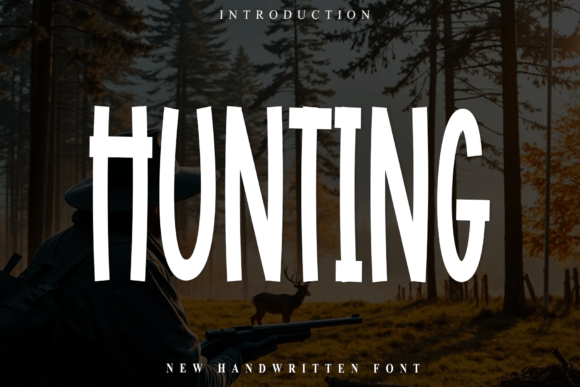
In a digital world saturated with clean, geometric sans serif fonts, there’s a growing desire for designs that feel personal, authentic, and crafted. That’s precisely where a typeface like Hunting finds its strength. This isn’t your typical, messy scrawl; it’s a beautifully flowing and elegant modern handwritten script font that bridges the gap between organic charm and professional polish. Its smooth, generous curves and graceful, elongated strokes give it a sophisticated, signature look that feels both intentional and effortlessly natural.
The Personality Behind the Strokes
Every font has a voice, and Hunting speaks in a tone of refined confidence. The key to its appeal lies in its balance. The letterforms are connected in a fluid, cursive manner, but the strokes are controlled and deliberate. You won’t find the chaotic, unpredictable drip of a marker here. Instead, the Hunting typeface offers a consistent baseline and a rhythmic flow that guides the eye smoothly from one character to the next. This makes it a standout premium font in the crowded script font category.
The visual personality is one of luxury and care. It suggests that the brand or individual using it values detail and aesthetics. It’s the typographic equivalent of a handwritten note on high-quality stationery versus a quick text message. For projects that require a sweeping, authentic, and naturally luxurious touch, Hunting provides that specific aesthetic without feeling overwrought or pretentious.
Where Hunting Truly Shines: Practical Applications
Understanding a font’s personality is one thing; knowing where to deploy it effectively is another. Hunting excels in contexts where a personal touch is paramount, but professionalism cannot be sacrificed. It’s a versatile creative font, but its best uses are specific.
- Personal Branding & Logo Design: For coaches, consultants, photographers, and artisans, a logo sets the first impression. Hunting works beautifully as the primary logotype or as a complementary accent mark. It instantly communicates a brand identity that is personal, approachable, and high-end. Think of a wedding photographer’s watermark or the signature on a boutique bakery’s packaging.
- Editorial & Publishing Design: In editorial design, such as magazine headlines, pull quotes, or chapter titles in a book, Hunting can add a dramatic, human element. It creates a strong visual hierarchy, drawing the reader’s eye to key statements. Paired with a clean serif font or a simple sans serif font for body copy, it creates a stunning and readable contrast.
- Luxury Wedding & Event Stationery: This is a natural home for Hunting. On wedding invitations, save-the-dates, menus, and place cards, its elegant flow sets a romantic and sophisticated tone. It’s a design asset that can unify an entire suite of event materials with consistent, beautiful typography.
- Digital & Social Media: For Instagram graphics, Pinterest pins, or YouTube thumbnails, Hunting can make text stand out in a fast-scrolling feed. Use it for quotes, calls to action, or header text on social media graphics. Its modern typography feel ensures it looks current, not dated. However, for web design, it’s best used sparingly for headlines or accents, as readability for long paragraphs on screens is not its primary strength.
- Packaging & Product Design: For artisanal goods, cosmetics, or specialty foods, Hunting on labels and boxes signals quality and craftsmanship. It helps a product stand out on a shelf by communicating that it’s made with care, not mass-produced.
Making It Work: Readability, Pairings, and Professional Use
Adopting a display font like Hunting requires more than just liking its look. A thoughtful approach ensures it enhances rather than hinders your project.
Font Pairing is Everything
The golden rule with a strong script font is to let it be the star. It needs a supporting cast. The most effective font pairing for Hunting is typically a neutral, highly legible typeface. A classic serif font like Garamond or a modern sans serif font like Montserrat or Open Sans creates a perfect counterbalance. Use your chosen neutral for body text, subheadings, and longer descriptions, and reserve Hunting for headlines, logos, and short, impactful phrases. This contrast not only looks professional but also ensures overall readability.
Testing for Your Specific Project
Before committing, always test. Type out the specific words and phrases you’ll use. Does the word “Congratulations” flow as beautifully as “Luxury”? Check the spacing between letters (kerning) and lines (leading). In a long headline, does the script feel cramped or airy? View it at the actual size it will be used—a font that looks stunning on a 27-inch monitor might become an illegible blur on a mobile screen or a small product label. This step is non-negotiable for ensuring brand consistency and professionalism.
Licensing and Commercial Use
As a commercial font, Hunting comes with a license that dictates its use. This is a critical consideration for any business. Most licenses cover use in logos, marketing materials, and physical products. However, they may have restrictions on embedding in software or using across unlimited web servers. Always review the End User License Agreement (EULA) that comes with the font. Reputable foundries are clear about what is permitted, ensuring you can use this design asset with confidence and legal clarity.
Evaluating the Full Family
Many premium fonts like Hunting include more than one style. Look for stylistic alternates, ligatures, or even different weights. These extras are invaluable. An alternate ‘g’ or ‘r’ can solve a tricky letter combination, and additional swashes can add a final flourish to a logo. Exploring the full character set allows you to customize the Hunting typeface to perfectly fit your brand identity, making it truly unique to you.
In the end, choosing a font like Hunting is a strategic design decision. It’s about selecting a tool that communicates the right values and emotions to your audience. When used thoughtfully, with an eye for pairing and context, it becomes more than just letters on a page—it becomes a core component of a memorable and engaging visual story.