Brush King: Capturing Energy and Motion in Your Designs
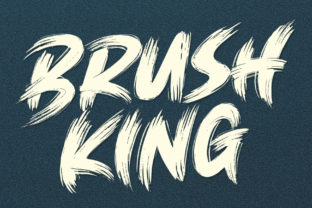
When you first see the Brush King typeface, the immediate impression is one of controlled chaos. It doesn't sit politely on the page; it demands attention. This premium font is a supercharged brush font that feels like it was created in a single, fluid motion of ink and adrenaline. It features a distinct focus on quick strokes and sharp details, making it a standout option for anyone looking to inject life into their visual content. If you have ever struggled to find a typeface that looks genuinely hand-lettered without appearing amateurish, this is the kind of design asset that bridges that gap.
In the world of modern typography, finding a display font that balances legibility with artistic flair is difficult. Many handwritten fonts look great at massive sizes but fall apart when used for subheadings. Conversely, some script fonts are too formal for casual branding. Brush King occupies a specific niche: it is aggressive, masculine, and incredibly dynamic. It works best when you want to convey a sense of action, whether you are designing for a sports brand, a streetwear label, or a high-energy event. The "supercharged" description isn't just marketing fluff; you can see it in the velocity of the strokes. There is a rhythm to the letterforms that suggests movement, making static text feel like it is flying off the screen or page.
Visual Characteristics and Personality
Understanding the anatomy of Brush King helps you know where to use it. The defining feature is the texture. Unlike digital fonts that try to simulate roughness with static textures, this typeface maintains sharp, clean edges on the strokes while retaining the organic irregularity of a physical brush. This is crucial for logo design and packaging design, where printing methods can sometimes blur softer edges. The sharp terminals give the font a "cut" look, providing a professional finish that raw, messy brush fonts often lack.
The personality of this font is bold and assertive. It is not a quiet background player. When you use Brush King, you are making a statement. It pairs exceptionally well with clean, geometric sans serif fonts. The contrast between the organic, energetic brush strokes and the structured, clean lines of a sans serif creates a sophisticated visual hierarchy. For example, using a font like Montserrat or Futura for your body copy allows the headlines set in Brush King to pop without causing visual fatigue. This is a classic strategy in editorial design and magazine layouts, where the cover needs to grab the reader instantly.
Strategic Applications: From Branding to Digital
The utility of a creative font like this extends far beyond just looking cool. It has specific strategic applications that can improve audience engagement and brand perception.
Logo Design and Brand Identity
For brand identity, consistency is key. If your brand voice is energetic, youthful, or rebellious, Brush King can become the cornerstone of your visual language. Imagine a craft brewery or a fitness apparel company. These industries rely on a raw, authentic feel. A standard serif font might look too corporate, while a standard sans serif font might feel too sterile. Brush King provides that "human touch" that suggests craftsmanship and passion. However, be mindful of scalability. Because of the sharp details, this font is best suited for the wordmark or logotype rather than the accompanying tagline.
Digital Marketing and Social Media
In web design and social media graphics, attention spans are short. You have about three seconds to stop a user from scrolling. High-contrast typography is one of the most effective tools for this. Brush King works incredibly well for YouTube thumbnails, Instagram quotes, and sale banners. Its bold nature ensures that the text remains readable even when overlaid on busy background images, provided you manage the spacing correctly. It creates an immediate focal point, guiding the viewer's eye to the most important message.
Packaging and Print
When it comes to physical products, texture matters. In packaging design, the tactile feel of the box combined with the visual texture of a brush font creates a multisensory experience. Think about hot sauce labels, energy drinks, or men's grooming products. Brush King communicates intensity. When printed on matte paper or textured cardstock, the sharp details of the font can look stunning, mimicking a stamp or a hand-painted sign. This reinforces the perception of a premium, artisanal product.
Practical Guidance for Implementation
Simply purchasing a commercial font isn't enough; you need to implement it correctly to get a return on your investment. Here is how to evaluate if Brush King is the right fit for your current project.
Evaluating Project Fit
Before you commit, look at the content of your project. Is the tone serious, legal, or highly technical? If so, a supercharged brush font is likely the wrong choice. It can undermine the authority of financial reports or medical advice. It shines in contexts where emotion drives the decision-making process. If you are selling a feeling—excitement, nostalgia, rebellion, or fun—this font is a strong candidate.
Testing and Pairing
Never use a display font in isolation. You need a support system. As mentioned, font pairing is essential. A helpful exercise is to set a headline in Brush King and then try five different body copy fonts. Try a serif font like Georgia for a vintage vibe, or a sans serif font like Open Sans for a modern, clean look. Pay attention to the x-height. You want the body copy to be distinct enough that there is no confusion between the header and the information.
Readability and Spacing
Because Brush King features quick strokes and sharp details, it can become visually dense if the letters are too close together. In modern typography, we often talk about "breathing room." When using this font for headlines, do not be afraid to increase the tracking (letter spacing) slightly. This allows the individual brush textures to be appreciated without the text looking like a solid black block. Also, test the font in both uppercase and lowercase. Brush fonts often have a very different personality depending on the case; sometimes the lowercase offers better readability for sub-headers, while the uppercase provides maximum impact for titles.
Commercial Licensing
Finally, always verify your license. If you are using Brush King for a client's logo or a product that will be sold, you need a commercial license. Many designers make the mistake of using a personal license for a commercial project. Ensure that the license covers the specific usage you have in mind, whether it is for app development, physical merchandise, or digital templates. Treating your design assets with professional respect protects both you and the type designer.
Ultimately, Brush King is more than just a collection of letters; it is a tool for expression. It bridges the gap between the raw energy of hand-lettering and the precision of digital design. When used thoughtfully, it can transform a flat layout into a dynamic visual experience that captures the energy of your brand and holds the attention of your audience. It is a valuable addition to any designer's toolkit, provided it is used with intention and an understanding of its powerful visual voice.