Lathenia: The Serif for a Modern, Editorial Brand
When you're building a brand that speaks of quiet confidence and timeless style, the typography you choose does more than just spell out words—it sets the entire mood. This is where a font like Lathenia comes into play. It’s not just another serif; it’s a carefully crafted tool for designers and brands aiming for that sweet spot between classic elegance and contemporary sharpness. Think of the fluid motion of a signature, but with the structural integrity of modern architecture. That’s the core personality of this typeface.
Anatomy of an Elegant Modern Serif
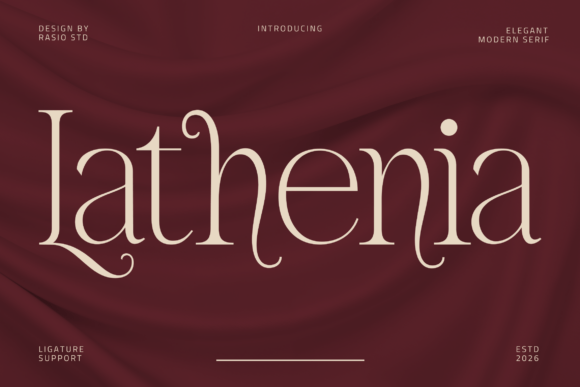
At first glance, Lathenia feels familiar yet distinctly new. Its foundation is in the high-fashion editorial world, where every letterform must command attention without shouting. The design features delicate line contrasts—meaning the thick and thin strokes within each letter are thoughtfully balanced, creating a dynamic visual rhythm. The geometric proportions are wider than a traditional serif, giving it a generous, open stance that feels luxurious and breathable on the page or screen.
What truly elevates Lathenia as a premium font is its advanced typographic features. The inclusion of sophisticated ligatures—where certain letter pairs connect in a more fluid, calligraphic manner—allows for custom-looking typography right out of the box. This isn't just a font; it's a design system. For a logo designer, this means you can create a wordmark for a client that feels uniquely bespoke without needing to manually alter every character. For a publisher, it means chapter titles can have an artistic, hand-crafted quality that enhances the reading experience.
Where Lathenia Truly Shines: Practical Applications
The versatility of a well-designed display font like Lathenia is its greatest asset. It’s not meant for long body text, but for moments where you need your typography to make a statement. Here’s where it becomes an invaluable part of your design assets:
- Brand Identity Systems: For upscale wineries, luxury boutique hotels, or high-end skincare lines, Lathenia provides a foundation of established craftsmanship. It communicates quality and attention to detail before a single word of copy is read.
- Publishing and Editorial Design: Book covers, magazine mastheads, and feature article headlines are perfect canvases. Its elegant curves and strong presence can carry the visual weight of a cover, creating instant shelf appeal.
- Premium Wedding Stationery: From save-the-dates to day-of signage, Lathenia offers a romantic yet modern alternative to traditional script fonts. It feels personal and artistic without sacrificing readability.
- Digital Presence and Social Media: Used strategically in website headers, hero sections, or Instagram quote graphics, it can elevate a brand’s digital aesthetic, making content feel more curated and professional.
It’s important to understand its role in visual hierarchy. Pairing Lathenia with a clean, geometric sans serif font for body copy is a classic and effective strategy. The contrast between the expressive serif and the neutral sans serif guides the viewer’s eye naturally, making your layouts both beautiful and functional. Avoid pairing it with another highly stylized script font or a handwritten font, as this can create visual competition and reduce clarity.
Integrating Lathenia into Your Workflow
Choosing a creative font is a strategic decision. Before committing Lathenia to a major project, take time to test it within your specific context. Type out your brand name, a key headline, and a sample tagline. Does it maintain its elegance at the size you’ll use most? Does its personality align with your brand’s voice? For a modern typography project, its wide proportions might be ideal, but for a compact logo, you may need to adjust letter-spacing.
Always review the full character set and OpenType features. Understanding what ligatures and alternates are available allows you to unlock the font’s full potential. When evaluating font pairing, start simple. Lathenia often works beautifully with a neutral sans serif like Helvetica, Futura, or a more contemporary geometric sans. The goal is complementary contrast, not conflict.
Finally, consider the practicalities of licensing. If you’re using Lathenia for client work or commercial products—whether it’s a logo design, product packaging design, or a monetized blog—ensure you have the appropriate commercial font license. This protects both you and your client and respects the work of the type designers. Investing in a quality typeface is investing in the professionalism and consistency of your brand’s visual communication.
In a landscape crowded with generic options, a typeface with a distinct point of view like Lathenia offers a real advantage. It provides the tools to build a visual language that feels intentional, refined, and deeply connected to a sense of artistic grace. For the designer, entrepreneur, or creative professional, it’s more than just a font—it’s a partner in crafting a compelling narrative.