Albatross: A Typeface Steeped in Maritime Grandeur
There’s a particular kind of design project that demands more than just legibility—it demands atmosphere. It’s the boutique distillery crafting its first signature bottle, the independent bookshop designing a seasonal catalog, or the artisan chocolatier establishing a visual identity that whispers of heritage and craft. For these moments, the choice of typography is foundational. Enter Albatross, a premium display serif font that doesn’t just occupy space on a page or screen; it builds a world. This isn’t a modern, geometric typeface. It’s a direct descendant of the ornate, high-contrast letterforms of the late 19th century, a period when type was as much an art form as the text it conveyed.
The Anatomy of an Era: Visual Character and Soul
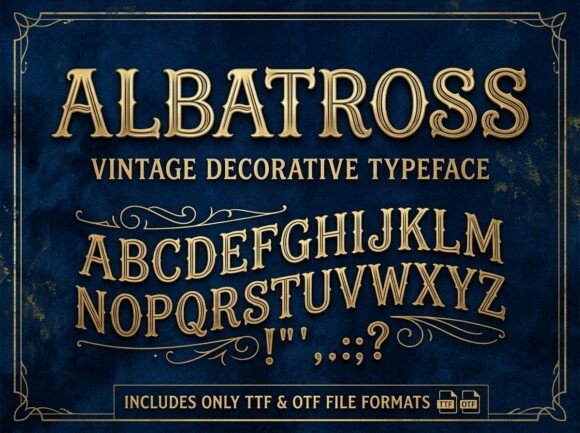
At its core, Albatross is a study in refined detail. Its visual personality is defined by several key features that work in concert to create its distinctive look. First are the intricate inline details—delicate, parallel strokes that run through the main letterforms, evoking the precision of steel engraving or letterpress printing. This gives the font a textured, almost three-dimensional quality, especially at larger scales where these details truly shine. Then there are the classic spurred serifs, those sturdy, bracketed terminals that ground each letter with a sense of stability and tradition. Unlike a simple hairline serif, the spurred design adds a touch of mechanical elegance.
Finally, the graceful ornamental flourishes—swashes and alternates available for certain characters—allow designers to inject a dose of authentic period flair. These aren’t just decorative afterthoughts; they’re integral to the typeface’s DNA, enabling everything from a simple, authoritative headline to a fully flourished, show-stopping title. The overall effect is a high-contrast "engraved" aesthetic with a Victorian-luxe soul. It feels premium, historic, and intentional. When you use Albatross, you’re not just setting words; you’re curating an experience.
Where Albatross Truly Sails: Ideal Applications
Understanding a font’s character is one thing; knowing where to deploy it is where strategy meets craft. Albatross excels as a creative font for projects that benefit from a strong, nostalgic, or artisanal narrative. Its strengths are most apparent in specific contexts.
- Brand Identity & Logo Design: This is Albatross’s home port. It’s a natural fit for logo design in industries like premium spirits (whiskey, rum, gin), independent apothecaries, bespoke tailors, heritage hotels, and gourmet food brands. The font immediately communicates a story of craftsmanship, legacy, and quality, helping a new brand feel established and an established brand feel timeless.
- Editorial & Publishing Design: For editorial design, Albatross is a powerful tool. Think of the chapter titles in a historical fiction novel, the cover of a special-edition magazine, or the masthead for a publication focused on travel, adventure, or vintage culture. Its high impact makes it perfect for high-impact historical book titles and cinematic “heritage-revival” editorial headers that need to grab attention on a crowded shelf or webpage.
- Packaging & Physical Products: In packaging design, details matter. The fine lines and flourishes of Albatross reproduce beautifully on labels, boxes, and tags, especially when printed with techniques like foil stamping, embossing, or letterpress that complement its engraved look. It lends an air of luxury and care to any product it graces.
- Digital Presence & Social Media: While it’s a display font, Albatross can be used strategically in web design for hero sections, banners, and key call-to-action headings. In social media graphics, it’s perfect for quote cards, announcement posts, and campaign visuals where a single, impactful phrase needs to carry the message. The key is to use it sparingly and pair it wisely.
Strategic Impact: More Than Just Pretty Letters
Choosing a typeface like Albatross is a strategic decision that influences how an audience perceives and interacts with your work. Its impact extends far beyond mere decoration.
First, it directly shapes brand perception. The Victorian-luxe aesthetic of Albatross instantly positions a brand as premium, knowledgeable, and rooted in tradition. It can make a startup feel like an heir to a century-old craft. This influences recognition—a brand set in such a distinctive typeface is hard to forget. Second, it establishes a clear visual hierarchy. Because it’s a display font, Albatross naturally commands attention for headlines and titles, guiding the viewer’s eye and creating a structured reading experience when paired with a more neutral body text.
However, this power comes with responsibility. Readability is paramount. Albatross, with its intricate details, is not designed for long paragraphs of small body copy. Its purpose is to be seen and admired at a larger scale. Using it for a 10-point caption would defeat its purpose and frustrate readers. The practical guidance here is simple: use Albatross for impact, and choose a clean, complementary sans serif font or a simple serif font for the supporting text. This pairing creates balance, allowing the display font to shine while ensuring the overall message remains accessible and professional.
Practical Guidance for the Modern Designer
Before you integrate Albatross into your toolkit, a thoughtful evaluation ensures it’s the right crew member for the voyage.
- Evaluate Project Fit: Does your project’s narrative align with history, elegance, adventure, or craftsmanship? If you’re designing for a tech startup or a minimalist lifestyle brand, Albatross might feel incongruous. It’s a specialist, not a generalist.
- Test Font Pairings: This is crucial. Create mockups pairing Albatross with potential body fonts. A classic sans serif font like Futura or a transitional serif like Baskerville can create a stunning, harmonious contrast. Avoid pairing it with other highly decorative script fonts or handwritten fonts, which can lead to visual chaos.
- Review Included Styles: A quality premium font like Albatross often comes with more than just the base letters. Explore the full character set for ligatures (special combined letterforms), stylistic alternates, and those beautiful flourishes. These are your tools for customization and adding unique flair to your logo design or headline.
- Consider Commercial Licensing: If this is for a client, a commercial product, or a business venture, ensure you have the correct license. Using a commercial font properly is a non-negotiable part of professional practice. Check the license for the number of users, permitted uses (print, web, app), and any restrictions.
- Design for the Medium: In web design, consider the font file size and loading speed. Use it for key headings only to optimize performance. In print, work with your printer to ensure the fine details will reproduce clearly at your chosen size and on your chosen paper stock.
Albatross is more than a design asset; it’s a vessel for storytelling. It offers a bridge to a rich typographic past, allowing contemporary creators to imbue their work with depth, character, and an undeniable sense of place. By using it with intention and skill, you can harness its timeless elegance to craft brand identities, publications, and marketing materials that don’t just look good, but feel authentically and compellingly historic.