Tiki Bongo: Infusing Your Designs with Tropical Energy
There are typefaces that whisper, and then there are typefaces that play a drum solo. Tiki Bongo belongs firmly in the latter category. It’s a spirited display font that doesn’t just occupy space on a page; it fills a room with the imagined scent of salt air and the distant rhythm of a beachside party. For designers and creators looking to inject a project with immediate, joyful energy, this is a tool worth understanding. Its value lies not in subtle sophistication, but in its bold, handcrafted character that commands attention and sets a specific, lively mood.
The Visual Anatomy of a Tropical Vibe
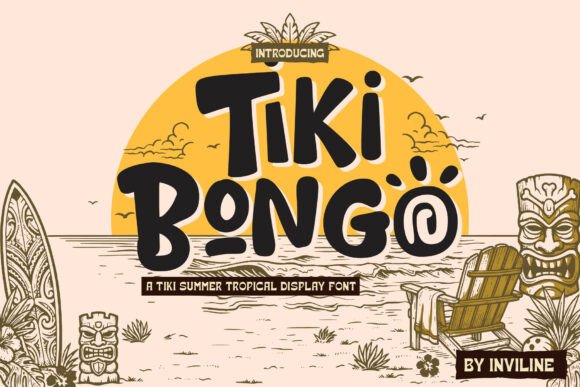
At its core, Tiki Bongo is a study in organic boldness. Its letterforms are not geometric or rigid; they are shaped with a confident, almost hand-carved quality. You’ll notice generous curves, slightly irregular baselines, and terminals that feel as if they were shaped by a skilled craftsperson rather than a vector pen. This gives it an authentic, artisanal appeal that synthetic, perfectly polished fonts often lack. The overall aesthetic is a fusion of tiki culture iconography and mid-century exuberance, resulting in a typeface that feels both nostalgic and refreshingly direct.
This is not a font for body text or lengthy paragraphs. Its strength is in short, impactful bursts—a headline, a logo, a banner. The high visual weight and distinct personality make it a prime example of a creative font designed for maximum impact. When you choose Tiki Bongo, you’re making a deliberate stylistic choice to move away from the neutral and toward the expressive. It’s a display font that works hardest in the spotlight, setting the tone for everything that follows.
Where Tiki Bongo Truly Shines: Practical Applications
Understanding a font’s personality is one thing; knowing where to deploy it is where strategy meets creativity. Tiki Bongo excels in projects where a sense of fun, celebration, or exotic allure is the goal. Think beyond the obvious tropical theme and consider its broader applications.
- Branding & Logo Design: For businesses in the food and beverage space—think craft cocktail bars, gourmet ice cream shops, or Caribbean-inspired restaurants—Tiki Bongo can become the cornerstone of a brand identity. It instantly communicates a casual, festive, and flavor-forward vibe. Paired with a clean sans serif font for body copy, it creates a dynamic and memorable visual system.
- Event & Packaging Design: Packaging design for summer products, specialty foods, or party supplies benefits immensely. Imagine it on a label for a pineapple hot sauce or a limited-edition summer ale. Similarly, event posters for music festivals, beach clean-ups, or themed parties gain an instant sense of occasion. The font does much of the thematic heavy lifting.
- Digital & Social Media: In the fast-scrolling world of social media, stopping power is everything. Tiki Bongo is fantastic for bold social media graphics, YouTube thumbnails, or podcast cover art. It helps content stand out in a crowded feed. For web design, it should be used sparingly—perhaps for a hero section headline or a special announcement banner—to avoid overwhelming the user experience.
- Merchandise & Publishing: The font’s handcrafted feel translates beautifully to merchandise like t-shirts, hats, and tote bags. For editorial design, it can add a striking pull-quote or chapter title in a travel magazine or cookbook, especially those focusing on island cuisines or outdoor lifestyles.
Integrating Tiki Bongo into Your Workflow: A Practical Guide
Adding a new premium font to your toolkit is an investment. To ensure Tiki Bongo earns its place, approach its use with intention. First, always test it within the context of your specific project. Does its energy match the message? A financial planning firm might find it too casual, while a surf school would find it perfect.
Next, master the art of the font pairing. Because Tiki Bongo has such a strong personality, it requires a calm, stable counterpart. A simple, geometric sans serif or a clean, readable serif font will provide necessary balance and ensure your overall layout remains professional and legible. Avoid pairing it with other highly stylized fonts like ornate script fonts or busy handwritten fonts, as this creates visual chaos.
Review the font’s full character set and any included styles or alternates. Does it have the symbols you need? Are there stylistic alternates that can add more customization? Finally, clarify the licensing. For any commercial project—from client work to products for sale—you must ensure you have the correct commercial font license. This protects you legally and supports the type designers who create these valuable design assets.
In the end, Tiki Bongo is more than just a set of glyphs. It’s a mood enhancer, a conversation starter, and a powerful tool for visual storytelling. Used thoughtfully, it can transform a standard project into one that feels vibrant, engaging, and unmistakably alive. It doesn’t just display words; it performs them.