Amsterdam: The Stylish Signature Font for Modern Creatives
Finding a typeface that feels both contemporary and personal is a common challenge. You need something that stands out without overwhelming your design, something that feels crafted but not fussy. The Amsterdam font enters this space with a clear point of view. It’s a premium font designed with the rhythm and flow of modern photography in mind, offering a sleek, signature-style aesthetic that feels instantly familiar yet fresh.
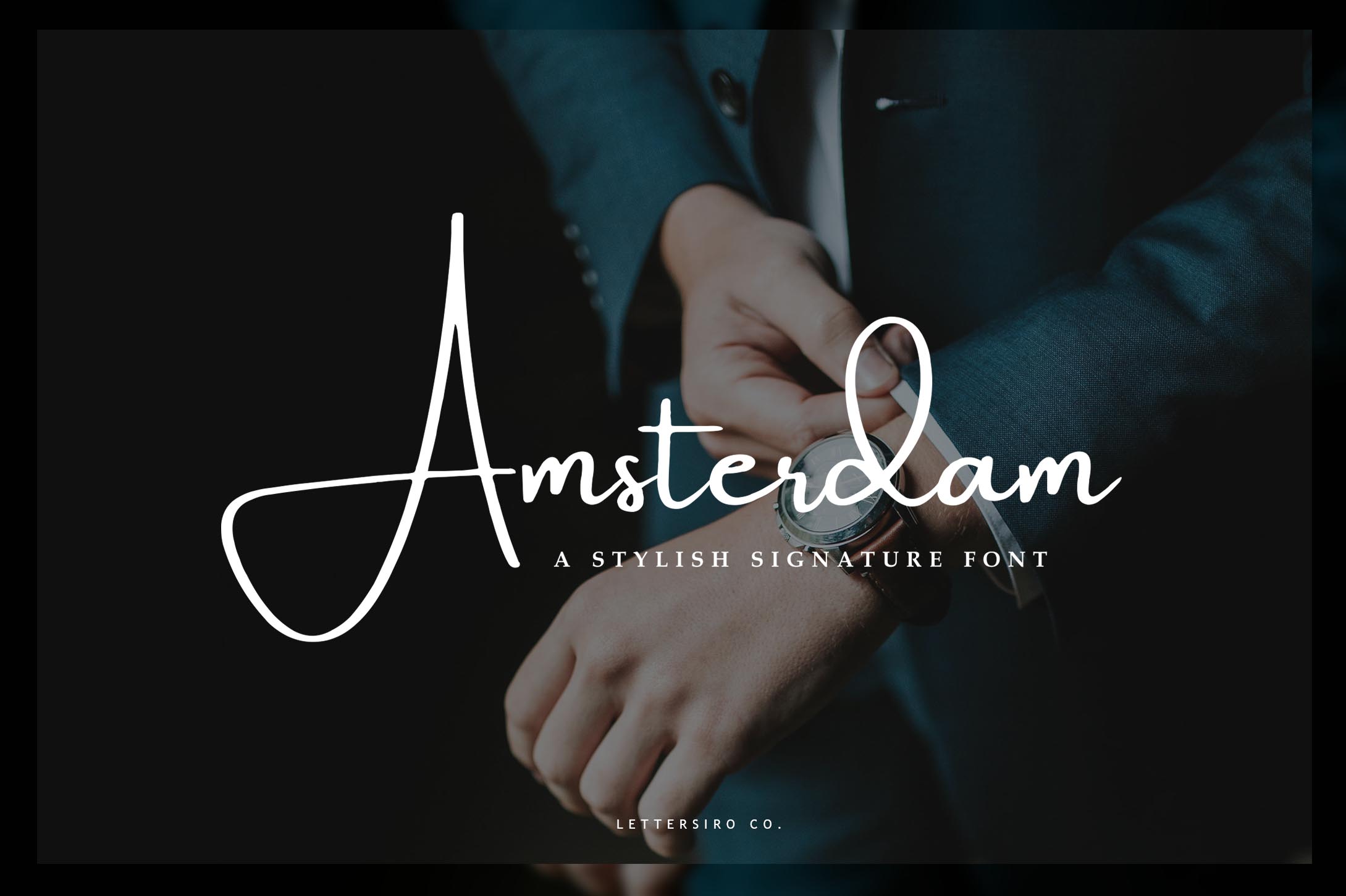
At its core, Amsterdam is a display font. This means it’s built for impact rather than long-form reading. Its visual characteristics are defined by elegant, flowing lines and a distinct connection between letters, mimicking the natural movement of a handwritten signature. The typeface carries a personality that is professional, artistic, and slightly luxurious. It avoids the heavy, ornate look of traditional script fonts, opting instead for a cleaner, more legible approach that fits seamlessly into modern typography. The overall appeal lies in its versatility; it feels equally at home on a high-end product label as it does on a digital watermark.
Where Amsterdam Elevates Your Projects
The true strength of a creative font like Amsterdam is how it adapts across different mediums. In brand identity work, it excels as the primary logotype for businesses that want to convey elegance and approachability. Think of boutique agencies, lifestyle brands, photographers, and event planners. When used in logo design, it provides an immediate sense of style without needing complex graphic elements.
For packaging design, the font adds a tactile quality. It suggests that the product inside is handcrafted or curated. On social media graphics, where attention spans are short, Amsterdam’s distinctive silhouette cuts through the noise. It works exceptionally well for quotes, call-to-action overlays, and profile headers. In editorial design, such as magazine headers or book covers, it serves as a striking headline font that draws the reader in.
- Watermarking: As noted, its primary use case is creating a stunning, non-intrusive watermark for photography portfolios.
- Web Design: Use it for hero sections or specific landing page headers to add a human touch to digital interfaces.
- Personal Projects: Ideal for wedding invitations, greeting cards, or personal blogs where a handwritten font feel is desired but with more sophistication.
Practical Guidance for Using This Typeface
Integrating a commercial font like Amsterdam requires a bit of strategy to ensure it enhances rather than hinders your message. Because it is a display face, readability is optimized for larger sizes. Using it for body copy in a long paragraph would likely frustrate readers; instead, reserve it for headlines, subheadings, and short bursts of text.
When considering font pairing, contrast is your best friend. Since Amsterdam has a lot of movement and personality, it benefits from being paired with a stable, neutral companion. A clean sans serif font or a simple serif font works best for supporting text. For example, if you are designing a brochure, use Amsterdam for the main title, but switch to a geometric sans serif for the details. This creates a clear visual hierarchy, guiding the viewer’s eye naturally.
Before finalizing your choice, test the font in context. If you are working on web design, check how it renders on different screen sizes. For print, print a sample to see how the ink sits on the paper. Always review the licensing terms to ensure the design assets cover your specific usage, whether it’s for a single client project or a massive commercial campaign. By treating Amsterdam as a strategic design asset rather than just a decorative element, you can significantly boost your project's professionalism and audience engagement.