Heart Beat: The Dingbat Font That Adds a Pulse to Your Designs
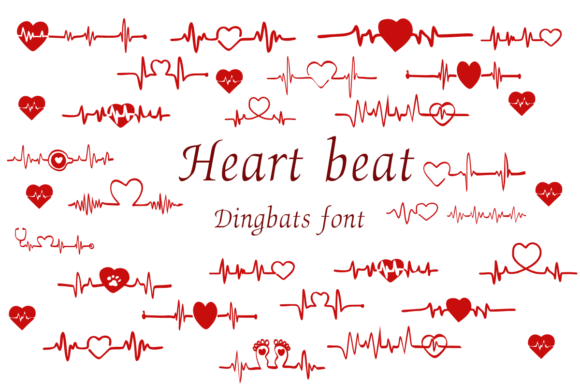
In the crowded world of premium font choices, finding a typeface that does more than just display letters can be a challenge. Enter Heart Beat, a unique dingbat font that doesn’t contain letters or numbers at all. Instead, every key on your keyboard activates a distinct, rhythmic heart-shaped beat. This isn't just a collection of static symbols; it is a dynamic set of design assets where each character pulses with its own sense of motion and personality. For designers, entrepreneurs, and content creators looking for a creative font that injects instant emotion into a layout, Heart Beat offers a playful yet sophisticated solution.
Understanding the Personality of Heart Beat
When we talk about modern typography, we usually focus on kerning, ligatures, and x-heights. However, with a dingbat font like Heart Beat, the conversation shifts to visual rhythm and symbolic language. The defining characteristic of this typeface is its variety. Unlike standard heart shapes that are uniform and static, the characters in Heart Beat mimic the irregularity of a real heartbeat or the flutter of excitement. Some glyphs are bold and heavy, while others are delicate and sketched.
This variation is crucial for visual hierarchy. Because no two characters are exactly alike, using Heart Beat prevents the repetitive, "stamped" look that often plagues design work involving standard icons. It allows you to create borders, backgrounds, or decorative elements that feel organic and hand-drawn. The "personality" of the font is whimsical, romantic, and energetic, making it a perfect fit for projects that need to convey warmth and excitement without relying on traditional script font or handwritten font lettering.
Strategic Applications for Brand and Marketing
For small business owners and marketers, choosing the right design assets can significantly impact audience engagement. Heart Beat is versatile enough to bridge the gap between personal expression and commercial utility. Here is where this font truly shines in real-world scenarios:
- Social Media Graphics: Algorithms favor engagement, and hearts are the universal language of "like." Using Heart Beat to create patterned backgrounds or highlight specific text blocks can increase the emotional resonance of your posts. It adds a layer of visual interest that a standard sans serif font cannot provide.
- Packaging Design: If you are in the business of confectionery, floristry, or gift services, the unboxing experience is vital. Heart Beat can be used to print custom tissue paper, create sticker designs, or decorate box inserts. It reinforces the brand identity of being caring and customer-centric.
- Web Design: In the digital space, loading times and visual appeal are king. Using a dingbat font for icons is often lighter than loading multiple image files. Heart Beat can be used for "favorite" buttons, section dividers, or loading animations, adding a subtle pulse to the user interface.
- Editorial Design: Publishers and bloggers can use Heart Beat to break up long blocks of text. A line of dancing hearts can serve as a thematic separator between chapters or blog sections, maintaining the reader's interest and adding a touch of whimsy to the editorial design.
Integrating Heart Beat into Your Design Workflow
Adopting a new commercial font requires more than just unzipping the file; it requires a strategy for integration. To get the most out of Heart Beat, you need to treat it as a distinct voice in your typographic choir. It is rarely going to be the workhorse font—that job belongs to your serif font or sans serif font. Instead, Heart Beat is the accent, the highlight, and the emotional exclamation point.
Mastering Font Pairing
The success of Heart Beat relies heavily on font pairing. Because the dingbat characters are expressive and detailed, they pair best with clean, simple typefaces. If you pair Heart Beat with an overly ornate script font, the result can look cluttered and chaotic. Instead, try pairing it with a geometric sans serif like Montserrat or a clean serif like Lora. The contrast between the structured text and the organic, pulsing hearts creates a balanced composition that guides the eye naturally. This balance is essential for maintaining readability while maximizing visual impact.
Readability and Visual Hierarchy
While Heart Beat is a creative font, readability in the traditional sense doesn't apply to dingbats. However, the concept of visual hierarchy is paramount. You should use Heart Beat sparingly to draw attention to key areas—such as a call-to-action button or a sale announcement. Overusing the font can dilute its impact, turning a rhythmic dance into visual noise. Think of it as a spice in a recipe; a little enhances the flavor, but too much ruins the dish.
Evaluating Project Fit and Licensing
Before deploying Heart Beat across your entire brand identity, evaluate if the "heartbeat" aesthetic aligns with your industry. It is a natural fit for health and wellness brands, dating apps, wedding planners, and lifestyle influencers. However, it might feel out of place in heavy industrial manufacturing or serious financial reporting, unless used ironically.
Furthermore, always review the licensing terms. As a premium font, Heart Beat likely comes with specific permissions regarding print runs, merchandise, and digital embedding. Ensuring you have the correct commercial font license protects your business and supports the type designers who create these unique assets. Check the documentation to see if the font includes different styles—perhaps a monochrome version and a multi-color version—giving you more flexibility in your logo design or marketing materials.
Beyond the Basics: Creative Explorations
Once you are comfortable with the basics, you can push the boundaries of how you use this typeface. Because Heart Beat contains unique shapes, it works exceptionally well in packaging design where you need custom patterns. Imagine a tote bag printed with a chaotic, overlapping pattern of Heart Beat glyphs; it creates a texture that feels high-end and bespoke.
For those in the digital space, consider using Heart Beat for data visualization. While it’s not a charting tool, you could use the varying heart sizes to represent data points in an infographic about "love languages" or "customer satisfaction." This approach makes dry data feel approachable and human.
Ultimately, Heart Beat is more than just a collection of shapes. It is a tool for injecting humanity into digital and print media. By understanding its rhythm and respecting its visual weight, you can use this font to create designs that don't just look good, but feel alive. Whether you are crafting a wedding invitation or a social media campaign, the pulse of Heart Beat ensures your message lands with warmth and style.